đź“– The Book of Invasions and Nolan Heritage in Ireland

For centuries, the Irish turned to a legendary book to trace their origins: An Leabhar Gabhála na hÉireann (“The Book of the Taking of Ireland”), more commonly known as The Book of Invasions. Compiled in the late 11th century by an anonymous author, it weaves together Celtic myths and poems into a cohesive narrative that stretches back to the Old Testament. According to this account, Ireland was conquered by successive waves of invaders: the Fir Bolg, the Tuatha Dé Danann, and finally the Milesians, or Gaels.

The book claims that the Gaels came from northern Spain, where a king named Breogán built a great tower with his sons Mil and Íth. Gazing from its heights, they spotted a mysterious island to the north—Ireland. After a series of adventures, Mil’s sons reached Ireland and overcame the native Tuatha Dé Danann, who retreated underground to become the fairies of Irish folklore. Thus began the age of the Celtic lords.

🇮🇪 A Brief History of Ireland

- Prehistoric Era: Human settlement dates to around 6000 BC, with remarkable sites like Newgrange from the Neolithic age.
- Early Christian Period: By the 5th century, Christianity spread through Ireland, giving rise to monasteries and a unique fusion of Christian and pagan traditions.
- Medieval Invasions: In the 12th century, the Normans arrived, establishing feudalism and reshaping Irish society.
- Colonial Era: The 17th century marked the beginning of intensified English rule, bringing conflict, including the Williamite War and the rise of Protestant Ascendancy.
- Modern Struggles: The 20th century saw the fight for independence, culminating in the Irish Free State in 1922 and full Republic status in 1949.

🌍 Ireland’s Many Invaders

Ireland’s history includes invasions from the Normans, Vikings, Scottish, Tudors, Cromwellian forces, Dutch, French, and even the Spanish.

🏰 The Nolans of Leinster


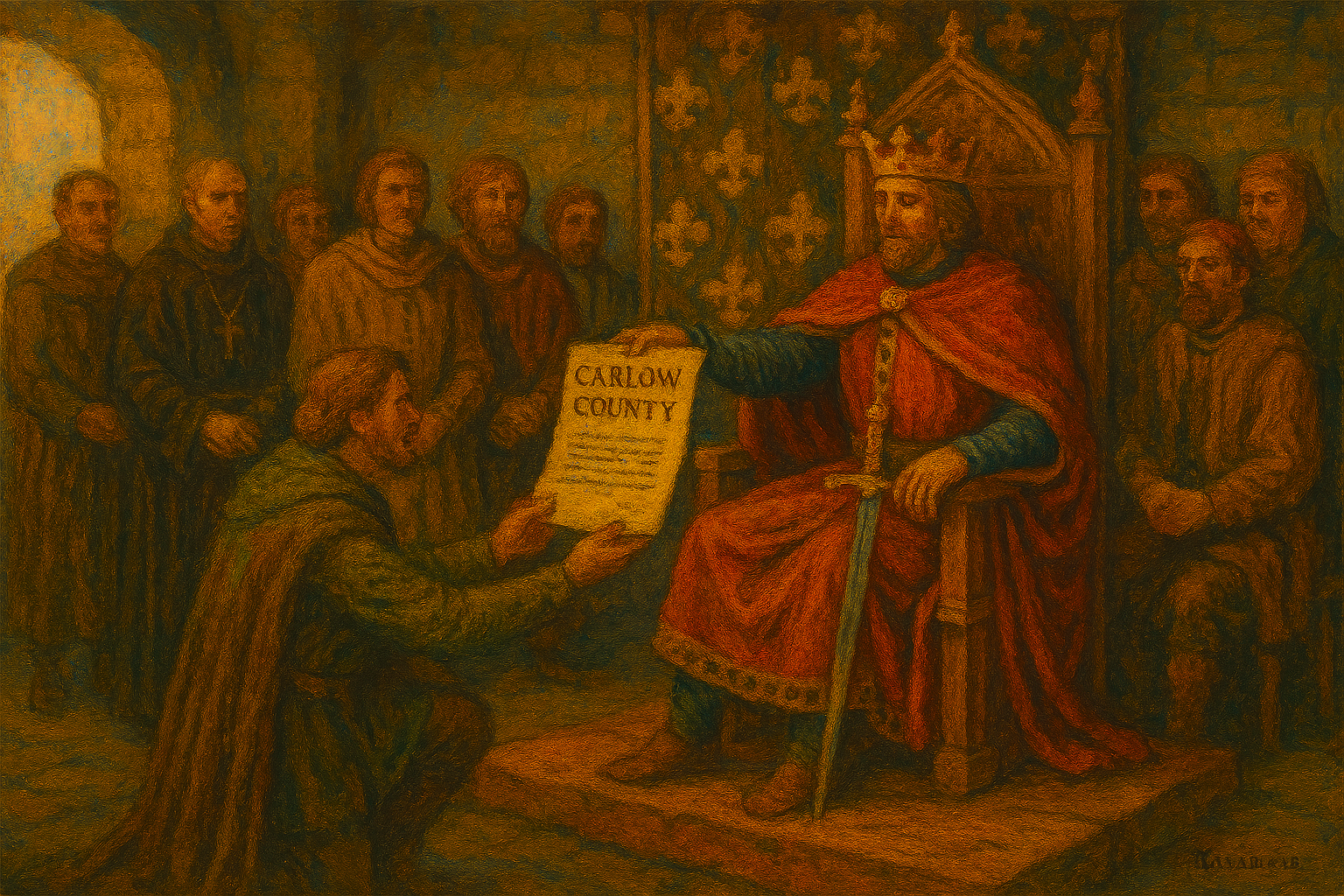
During the reign of King Edward II (1307–1327), the Nolan family was granted County Carlow in recognition of their loyalty. Located in eastern Leinster, they became chiefs of Fotharta Feadha, now the barony of Forth. According to The Annals of the Four Masters, the Carlow Nolans descended from Eochaidh Fionn Fuathairt, a 2nd-century Irish prince exiled from Tara in County Meath. He settled in Leinster on lands previously promised to him and his descendants.
Interesting connections suggest Nolan ancestry traces back to Devon (England) and Brittany (France), reinforcing their identity as the “Ancient Ones” of Leinster. Historical sources mention their herding of white cattle around Tullow, and the family’s most ancient ancestor, Ugaine Mór, High King of Ireland (circa 331–300 BC), is said to have married a Gaulish princess.


Main Links:

Click here to visit Main Page
Click here to Visit Home Page
Our Family History Page Links:

Click here to visit The Nolan Family History Page
Click here to visit The Jennings Family History Page
Click here to visit The Theisen Family History Page
Click here to visit The McNeely Family History Page
Click here to visit The Crone History Page
Click here to visit The Coakley Family History Page
Click here to visit The Colclough Family History Page
Our Family Tree Page Links:

Click here to visit The Nolan Family Tree Page
Click here to visit The Jennings Family Tree Page
Click here to visit Theisen Family Tree
Click here to visit Bynell Family Tree
Click here to visit The Crombie Family Tree Page
Click here to visit The Crone Family Tree Page
Click here to visit The Coakley Family Tree Page
Click here to visit The Colclough Family Tree Page


Click here for Quick Navigation Page
Click here for Links to Family Photo Pages